
Defending champions Indian men's and women's kabaddi teams have made strong starts to their Asian Games campaign, securing decisive victories over Japan and Bangladesh in their respective opening matches. The men's team defeated hosts Japan 49-24, while the women's team overcame Bangladesh 42-21.

SAI has defended the exclusion of five Indian tennis players from the Asian Games squad, saying they failed to meet the prescribed continental ranking criteria.

Kumkum Mohod, 17, made history by becoming the first Indian to win an individual recurve gold at the Asian Games in Aichi-Nagoya, also securing an Olympic quota for LA 2028. Her victory over South Korea's Oh Yejin in a tense shoot-off has boosted India's confidence to challenge the long-standing Korean dominance in recurve archery. Mohod attributes her success to mental preparation, visualisation, and family sacrifices, and is now focused on securing her individual spot for the 2028 Olympics.

Neeru Dhanda and Kynan Chenai secured a historic mixed team trap shooting gold at the Asian Games, making Dhanda the most successful Indian athlete with three medals. Dhanda, who also won individual gold and team silver, overcame illness and fatigue, while Chenai provided crucial stability, using his father's lucky gun barrel.
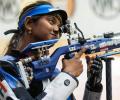
India's shooting campaign at the Aichi-Nagoya Asian Games commenced with a strong performance, securing two silver medals in the women's 10m air rifle event. Elavenil Valarivan was instrumental, winning an individual silver and contributing to the team silver alongside Sonam Uttam Maskar and Vidarsa Vinod. While Valarivan narrowly missed individual gold, her performance, along with the team's, provided an encouraging start for India.

Indian golfers Pranavi Urs and Saptak Talwar delivered impressive performances on the opening day of the Asian Games, with Urs lying second in the individual women's standings and Talwar tied third among men. The Indian women's team is tied sixth, while the men's team is tied fifth, setting a promising tone for the competition.

The Indian Olympic Association (IOA) was left red-faced during Sunday's felicitation ceremony to award cash prize to Asian Games medallists as the parent body got multiple names wrong on the cheques and even missed out on one.

Indian shooter Neeru Dhanda secured a historic gold medal in the women's trap event at the Asian Games, becoming the first Indian woman to achieve this feat. Her victory came despite a severe illness that hospitalised her just 10 days before the competition, and challenging weather conditions during the final. Coach Peter Wilson praised her dedication and focus, highlighting her ability to overcome adversity.

PV Sindhu expressed her pain and disappointment following her quarterfinal exit at the Asian Games, where she lost to China's Chen Yufei. Despite the setback, the two-time Olympic medallist affirmed her commitment to addressing her shortcomings and highlighted her enduring passion for the sport, vowing to return stronger.

Indian men's hockey coach Craig Fulton discusses the team's recent successes, including defending the Asian Games gold and securing direct qualification for the 2028 Los Angeles Olympics. He surprisingly rates the Paris Olympics bronze medal as his most satisfying achievement, highlighting the team's strategic planning and resilience. Fulton also outlines the team's future transition plans, focusing on upcoming tournaments and developing new talent for LA 2028.

Ace Indian shuttler PV Sindhu voiced strong displeasure regarding the "not really well organised" badminton scheduling at the Asian Games, citing three matches in 24 hours and insufficient recovery time.

The Indian men's 10m air pistol team finished fourth at the Asian Games, missing out on a bronze medal. None of the Indian shooters qualified for the individual finals, continuing a disappointing performance for the country's shooting contingent, which also saw the women's team fail to secure medals.

Indian skeet shooter Anantjeet Singh Naruka has positioned himself strongly for the Asian Games final, tying for the lead after four qualification rounds. While other Indian male shooters struggled, Naruka's performance offers hope. In women's skeet, Raiza Dhillon and Parinaaz Dhaliwal are also in contention for individual medals, and the women's team holds a bronze medal position, though facing tough competition. The final qualification rounds are crucial for India's medal aspirations.

India's Rudrankksh Patil, Himanshu Dhillon, and Parth Mane secured a silver medal in the men's 10m air rifle team event at the Asian Games. The young trio displayed composure, with debutant Parth Mane's performance being particularly noteworthy, contributing to India's growing medal tally in shooting.

Wushu player Divyanshi Choudhary, dropped from the Asian Games squad due to an alleged ACL tear, has accused the national federation of physical and mental harassment, claiming she was cleared by doctors to compete and was replaced unfairly.

Shafali Verma produced a stunning 15-ball blitz as India crushed Japan by eight wickets with 15 overs to spare and stormed into the Asian Games semi-finals.

Satnam Singh and Salman Khan secured India's first-ever men's double sculls bronze medal at the Asian Games, a significant achievement amidst an otherwise challenging performance by the Indian rowing team. The medal comes despite pre-competition controversy regarding team selections, with the duo forming their partnership just five days before the event.

Indian long jumper M Sreeshankar secured a silver medal at the Asian Games despite an injury during his fourth attempt. He expressed confidence that this fourth career silver would lead to a major gold, specifically targeting the 2028 Olympics. Sreeshankar highlighted the challenging weather conditions and the close competition, acknowledging luck played a role in his medal win.

Thailand's Puripol Boonson made history by winning the 200 metres gold, completing an Asian Games sprint double and matching the Asian record, while China's 18-year-old javelin sensation Yan Ziyi defeated an Olympic champion for her first gold.
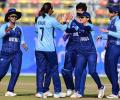
Three athletes from Narmadapuram district in Madhya Pradesh, Vivek Sagar Prasad (hockey), Aadhya Tiwari (soft tennis), and Harshita Tomar (sailing), have been selected to represent India at the 2026 Asian Games in Japan. This selection highlights the district's growing sporting prowess, with experienced and emerging talents ready to compete on the continental stage.

Indian table tennis mixed doubles pair Diya Chitale and Manush Shah secured a coveted Asian Games medal, overcoming a recent slump in form and the personal tragedy of Diya's coach Peter Engel's death. Their triumph is seen as a fitting tribute to Engel and fuels India's hopes for an Olympic medal in the future.

Mirabai Chanu completed her glittering medal collection by winning Asian Games silver, adding the missing continental medal to Olympic, World, Commonwealth and Asian Championship honours.
India's shooting campaign at the Asian Games faced a setback as Elavenil Valarivan and Parth Mane finished fourth in the 10m air rifle mixed team final, extending the country's wait for a gold medal. Despite strong qualification, the Indian pair struggled in the final, while China secured gold with a world record. This follows other near-misses for India, highlighting the intense competition and the need to convert strong starts into medals. The focus now shifts to upcoming events, including Manu Bhaker's participation.

India's Asian Para Games campaign saw a remarkable performance, particularly in athletics, securing five gold medals on Tuesday. Nishad Kumar and Deepthi Jeevanji were standout performers, both setting new Games records and clinching multiple golds. The nation's overall medal tally reached 35 by the end of day two, with significant contributions from shooting, powerlifting, swimming, table tennis, archery, and badminton, promising further success.

India's women's hockey team is set to face defending champions China in the Asian Games final, aiming to secure their first gold medal in 44 years and a direct qualification for the LA Olympics. The team, buoyed by recent successes like the FIH Nations Cup win and a strong World Cup performance, is confident but acknowledges China's strength. Both teams had unbeaten runs to the final, setting up a high-stakes clash.
Indian boxers Sakshi Chaudhary and Sumit faced early exits at the Asian Games. Sakshi lost her pre-quarterfinal bout to Kazakhstan's Alua Balkibekova, while Sumit was forced to concede his match due to a knee injury. Another Indian boxer, Parveen, is scheduled to compete later.
Neeru Dhanda underlined her credentials as India's in-form trap shooter by hitting 48 of 50 targets to emerge joint leader in the women's qualification of the Asian Games.

The Table Tennis Federation of India (TTFI) has clarified that Manika Batra's exclusion from India's Asian Games squad was due to strict adherence to existing selection criteria. Despite her name being considered, Batra did not meet the requirements, primarily lacking a national ranking and not being in the top 50 of international rankings at the time of selection. The decision was a collective one by the selection committee, based on a comprehensive assessment.

India's Esha Singh secured a silver medal in the Asian Games women's 25m pistol individual competition, navigating five consecutive shoot-offs before narrowly missing gold by one shot against China's Xiao Jiaruixuan.

India achieved its most successful day at the Asian Games, securing 10 gold medals, 21 silver, and 29 bronze, bringing the total to 60 and improving its ranking to seventh. Compound archers swept all team golds, including an Olympic quota, while trap shooters Neeru Dhanda and Kynan Chenai also won mixed gold. Boxing and wrestling added bronze medals, and the women's hockey team reached the final, assuring at least a silver.

India's Olympic gold medallist javelin thrower Neeraj Chopra discusses the emotional and physical challenges of missing the Asian Games due to a ligament injury. He shares his process of accepting the setback, focusing on rehabilitation, and preparing for future competitions, while also offering advice to fellow athletes and aspiring javelin throwers.
Neeru Dhanda has taken the sole lead in the women's trap qualification at the Asian Games, positioning herself for a historic individual gold. Fresh from a World Cup win, Dhanda maintained strong consistency. In the men's trap, Shapath Bharadwaj made a significant recovery to move into joint fifth place, keeping India's medal hopes alive in both individual and team events.

Indian rowers Satnam Singh and Salman Khan secured a historic bronze medal in the men's double sculls at the Asian Games, marking India's first-ever medal in this event. Despite the achievement, both athletes expressed mixed feelings due to last-minute crew changes that they believe affected their performance. The bronze was a saving grace for the Indian team, which otherwise delivered one of its worst Asian Games rowing performances, equalling previous low tallies. The controversy surrounding team selections and the impact of weather disruptions on the competition schedule were also highlighted.

India achieved a respectable fourth-place finish in the Asian Games medals tally, securing 85 medals including 21 gold, driven by a significant late surge in boxing, archery, wrestling, and hockey, despite initial setbacks in shooting and athletics.

India's Para Asian Games contingent received a formal send-off in New Delhi, with Sports Minister Mansukh Mandaviya launching the new Team India jersey. Prominent para-athletes, including flag bearer Pramod Bhagat, attended the ceremony. Mandaviya encouraged the athletes to win medals, assuring them of government support. Head coach Satyanarayana expressed confidence in medal prospects despite a reduced quota, while athletes like Suvarna Raj and Pramod Bhagat voiced their determination to secure medals.

India's men's and women's squash teams have successfully advanced to the semifinals of the Asian Games in Nagoya, securing at least a bronze medal for the nation.

India added significantly to its Asian Games medal tally with strong performances across athletics, squash, and boxing. Ancy Sojan and Sarvesh Kushare secured silver medals in long jump and high jump respectively, while Parul Chaudhary and Harita Bhadra earned bronzes. Despite high hopes, Indian squash players missed out on Olympic berths, settling for silvers. Boxing saw three athletes advance to semifinals, assuring more medals, though individual badminton campaigns concluded without a medal.

India achieved significant milestones at the Asian Games, securing its first-ever women's trap gold through Neeru Dhanda and another gold in the women's 4x400m relay. These victories pushed India's medal tally past 50, placing the country in the top 10. The day also saw strong performances in boxing, volleyball, archery, squash, and tennis, contributing to a successful outing despite some disappointments in other events.

Top-ranked 25m pistol shooter Esha Singh discusses her preparation for the upcoming Asian Games, highlighting her unique approach of competing against herself rather than others. She reflects on her recent World Cup gold and world record, emphasizing the importance of mental freshness and focusing on basics.

If India's medal tally ultimately falls significantly short of Hangzhou, the conversation should not stop with the athletes or coaches. It should extend to a much more uncomfortable institutional question: After years of increased investment, programmes, infrastructure and policy attention, where exactly is the system failing to convert that investment into medals, champions and depth across sports? asks Jaydeep Ray.
